

Reflections On Walden Pond
In 1845 Thoreau headed for a cabin in the woods to gain perspective on a tumultuous world. 181 years later, it’s looking like it’s time to follow him.

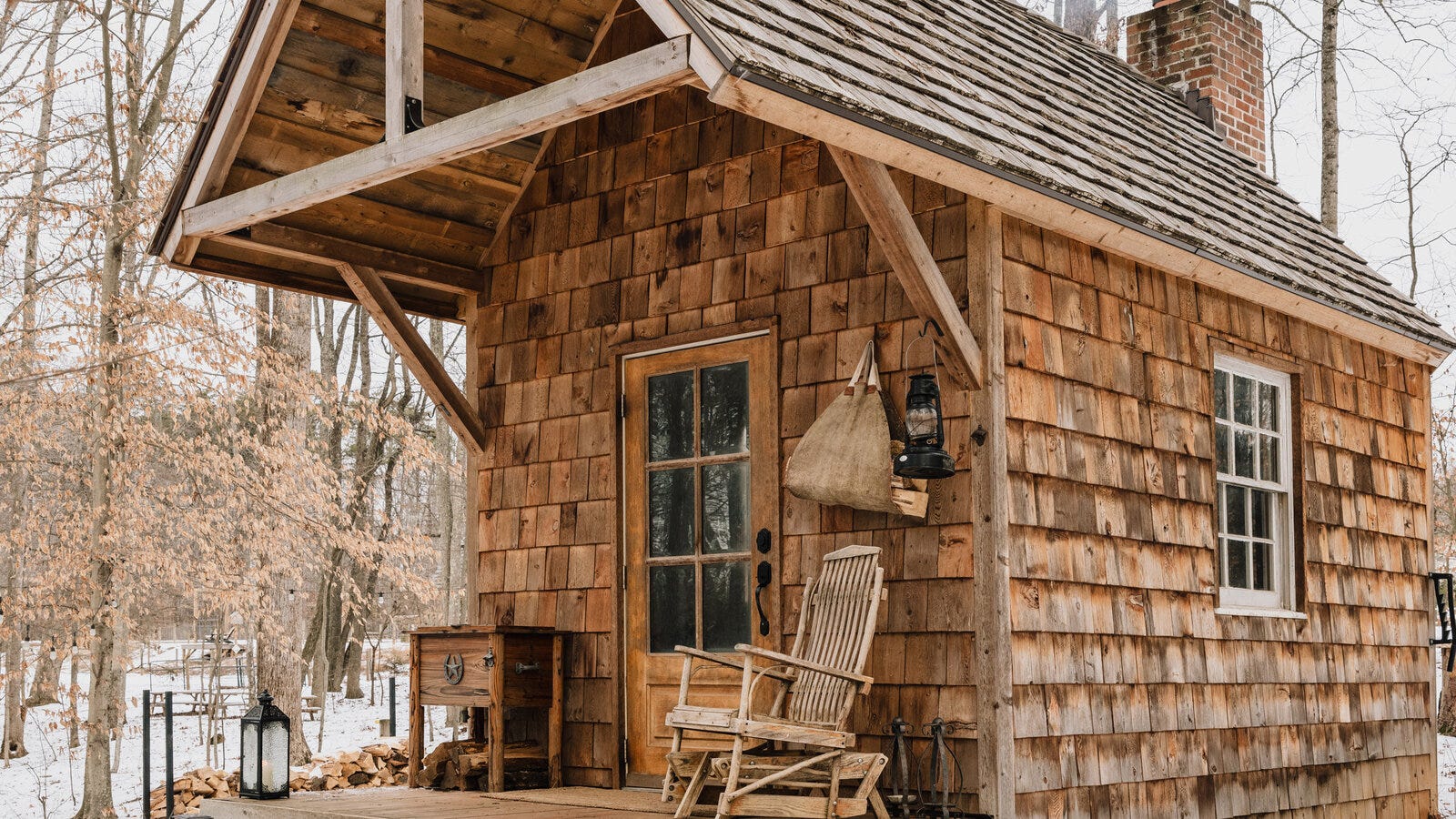
Somewhere back in college I read Henry David Thoreau’s “Walden,” though like most of the books I read in those days, I didn’t have the experience to understand it fully. Back then, I thought it was about a man who made a strange choice to leave society and go live in the woods—which, given the state of our world, doesn’t seem so strange to me anymore.
Maybe that’s why I was drawn to watch Ken Burns’ new PBS biopic, “Henry David Thoreau.”
Thoreau was living in a time of tumultuous change. The Industrial Revolution was forcing people off farms and into cities, into the brutal factories that William Blake so memorably called “these dark, Satanic Mills.” Science and technology were teaming up with capitalist industry to create what we now know as consumer culture. Thoreau watched as the pleasant folk of Concord, Mass became bedazzled by things and doodads that everyone suddenly had to have. They worked in increasingly mindless, degrading jobs to get money to buy the latest thing. But they weren’t happier. Looking at this emerging society, Thoreau observed, “The mass of men lead lives of quiet desperation.”
That’s when he walked out of Concord and built his little one-room hermitage on a piece of land given him by his friend and mentor, Ralph Waldo Emerson. He wasn’t fleeing society. In fact, he was often in town, buying his supplies. He hosted plenty of visitors who made the long walk out to his cabin, and his annual melon parties overflowed with townsfolk. Thoreau walked out of civilization because he was in too close; he couldn’t see what was really happening. I think he also left town because he was afraid the consumer culture might gradually seem “normal.” He did not want to be lulled into the narcotic sleep of shopping.
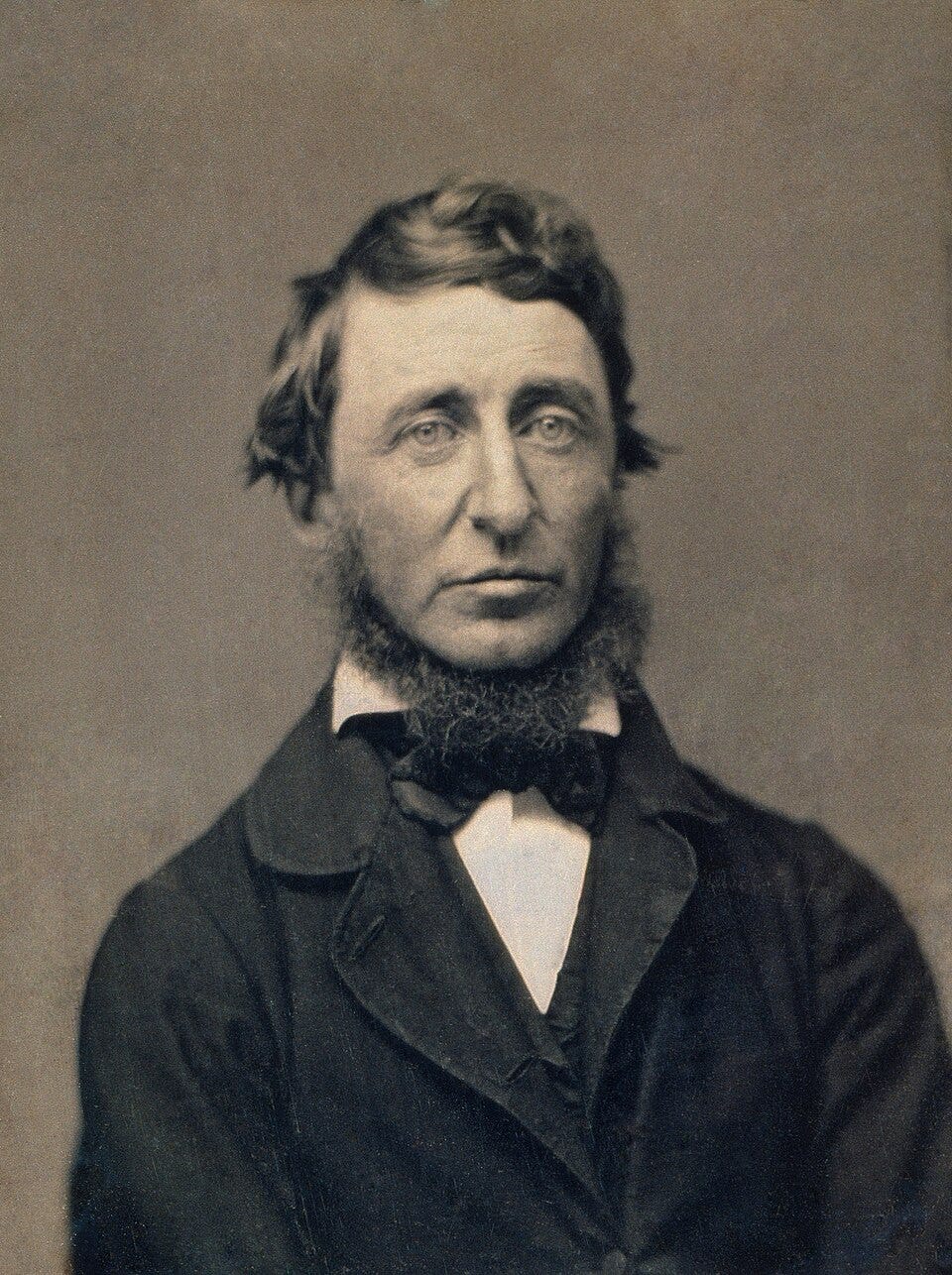
And more than just the churn of materialism, Thoreau could see that the mass movement off the land was eating away at the human soul. There was a natural and sacred connection, he believed, between the wildness of nature and the interior wildness of the soul. Break that tie, and two calamities begin simultaneously: people’s rich inner life shrivels, and the earth becomes merely a profane collection of “natural resources” and is soon degraded and abused.
Watching the PBS series, I could see clearly: Thoreau was right about 1845 and right about 2026.
I don’t know where this essay is going, because I’m not sure where I am going right now. Let me explain. I feel certain that the seismic shifts that began with the Industrial Revolution—the massive, combined forces of science, technology and capitalism—are about to explode in our time, and I’m not sure what I need to do in response. No one wants to be a Luddite. No one wants to call a halt to progress. I certainly don’t want to locate our redemption in some Golden Age of the past. But it’s also clear to me that the story of reason, progress, the triumph of science, and our (eventual) redemption by technology—that story has no next chapter. It’s gutted our hearts, hollowed out our homes and families, our communities, our nation. We can see what it is doing to our children, and that alone should cause us to take at least one tentative step toward Walden. But what can one person do? Where do I draw the line?
I’m not sure about all that, but there’s something about Thoreau’s walking out of town that intrigues me. It feels like a version of St. Anthony the Great (251-356), known as the Father of All Monks, who walked out of town—out of church—because even 1700 years ago he knew he needed to get perspective on what was real and true. It echoes the paths of St. Benedict (480-547), Hildegaard of Bingen (1098-1179) and Clare of Assisi (1194-1253)—all who chose to live apart from the regnant culture. These early monastics didn’t abandon society, they just settled on the periphery, on the edge. They were in the world, but not of it.
Something like that is what is drawing me. I’m thinking that anyone who wants to critique the present system with all its assumptions about power, wealth and authority (and the discrimination and violence it takes to sustain it)—that person is going to have to move to the edge.
Maybe I’m drawn here because when I read “Walden” I start to recognize modern-day Thoreau’s. I’ve been reading a lot of Wendell Berry the last few years. He was born in Kentucky and made it big-time in the New York literary scene, but he felt empty. There was something unreal about it all. So, despite the warnings of his literary agent, that it would end his promising career, Berry moved back to Port Royal, Kentucky, bought a farm next to the one he grew up on, and became a farmer-writer-philosopher-poet. He had all of Thoreau’s reservations, especially about the great divorce of people from their ancestral land, and the soul-deadening effects of rationalism, materialism, and scientism.
I think, too, of John Moriarty, born in Ireland, who became a star in the academic world until he came to the end of himself. He left his teaching post in Canada and returned to Ireland with the intention of finding what he called his “bush soul.” He spent his first years trying to “baptize himself” out of Western culture and into a wildness of mind and heart in the mountains and lakes of Connemara.
People in Concord thought Thoreau was a little loopy, living in his spartan hut in the woods. Wendell Berry, farming with his team of horses, seems like a harmless eccentric. Same with Moriarty, leaving the high life for a forgotten hillside, lost in Connemara.
But maybe they know something. Maybe they’re like the animals who sensed the 2004 Indian Ocean tsunami long before it hit. The elephants who moved inland, the birds who fled coastal regions.
We don’t have to leave town, but if we know something is not right at the center of our own version of Concord, we’re going to have to move out to the edge, pitch a tent for our “bush soul,” be in it but not of it, watch and pray, make sacrifices to preserve eternal goods, look out for the vulnerable, and find a way to stay in the wild. That, anyway, is my hope.
To the extent that I am able, I find myself doing something similar to what you are describing. I have retreated to my patch of land, where I have found a new tribe after I flamed out of the high-tech, high stress world of modern health care. I can't quite divorce myself from the independent media, as shutting out all input about the world leaves me fretting about the lack of information. Still, the more I concentrate on what's immediately around me; the plants, the trees, the critters and my relationship to them, my sense of obligation to be a steward thereof, grounds me in a way that racing along the hamster wheel of public service and private enterprise has never matched. The fact is, our predecessors did admirably well without all the trappings of modern life. In many ways they were healthier, even as they suffered from maladies that we have since conquered. Somewhere, somehow, there's a marriage of progress and the timeless wisdom of communing with the earth and its other inhabitants. I aim to do my best to find it in what time remains to me.
Your reflection brought to mind the memory, years ago, of inviting an African-American friend to a July 4th cookout. He politely declined. I began to mention a few other colleagues who were also Black and would be attending. He smiled, knowing immediately what I was doing, and again politely declined.
The next day, he emailed me a copy of Frederick Douglass's historic 1852 address, “What to the Slave Is the Fourth of July?” ("I say it with a sad sense of the disparity between us. I am not included within the pale of glorious anniversary! Your high independence only reveals the immeasurable distance between us.")
I read it and wept, knowing he was right. "The disparity" seems even greater today. That was my first awakening to my own blindness about "my native land".
I presently live on land that was once a fertile fishing and crabbing ground for the Lanape and Naticoke, as well as places where they grew maize, squash, climbing beans, and herbs. Now and again, I will find an arrowhead or piece of pottery. I bring it to the Nanticoke center and return it with an apology, which is always graciously and solemnly accepted.
I no longer have July 4th picnics. I do join my friends, or I have held celebrations on January 1 (abolition of transatlantic slave trade), or Juneteenth, July 5th, or August 1 (abolition of slavery in the West Indies). I attend the annual Pow Wow of the Lanape and Nanticoke.
This year, my church is observing The Martyrs' Project on July 5th. https://martyrsday.us/
Capitalism, conspicuous consumerism, and the rapidly growing economic disparity among oligarchs and the even more rapidly vanishing middle class, coupled with the free-fall to the bottom of the poor, feel like salt rubbed into the wound that has never healed.
I completely understand walking away from it all. I am more and more compelled to walk right into it, to stand with my siblings of color and work with them to bring about the dream of freedom, this time stripped of its hypocrisy.
I do allow myself the luxury of an annual spiritual retreat with my sisters in the OSH, where I live and eat simply, recharge my spiritual batteries, and realign my moral compass.
There is, within us all, a bit of Thoreau. Especially because we are American.