

Now, Why Start a Nice Advent With All Those Apocalyptic Readings?
Because it’s in this chaotic, cosmic petri dish that a new creation is born.

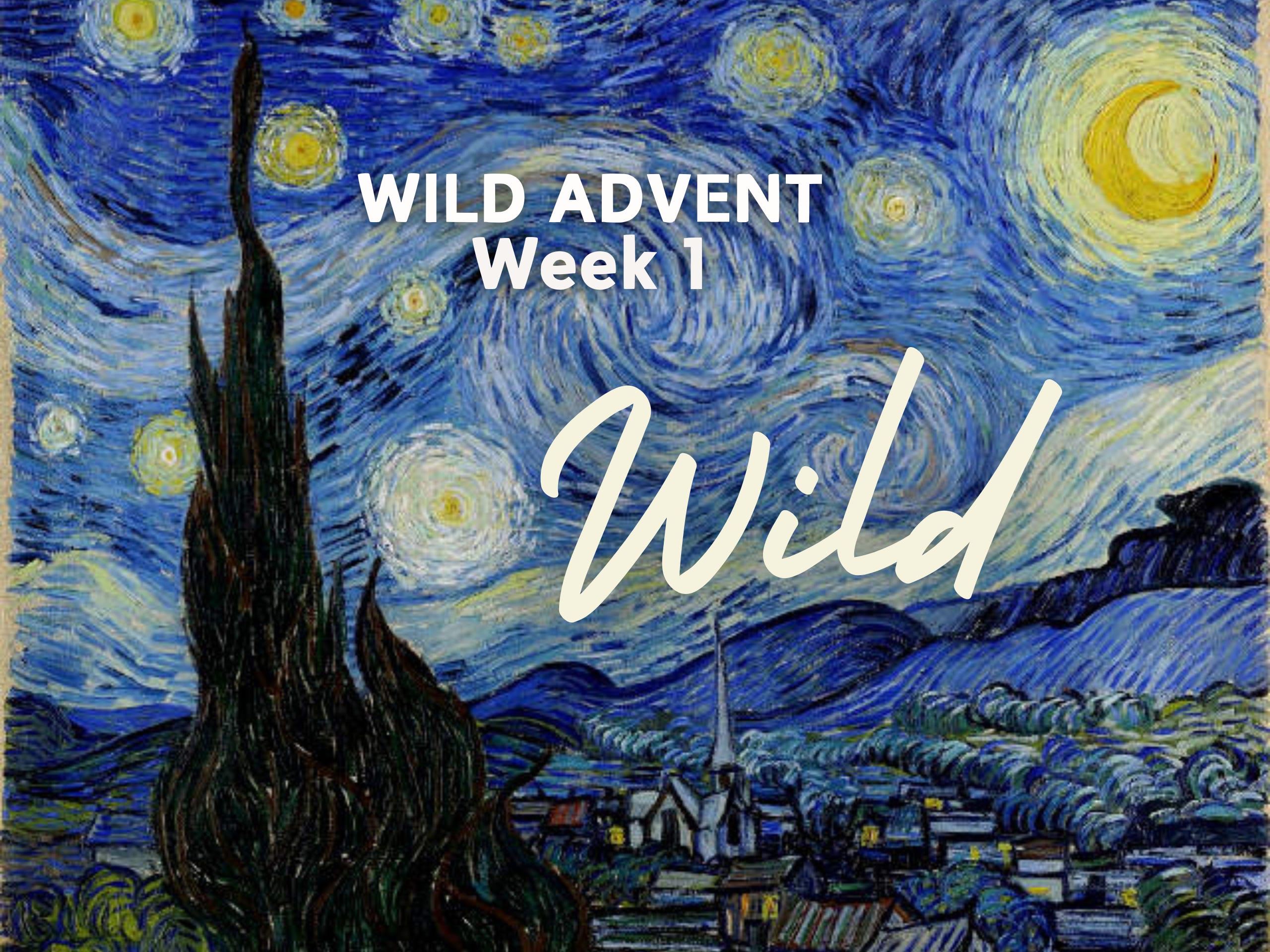
In the readings appointed for Advent, you might expect to start with the Annunciation to Mary, or maybe back up just a bit and start with Mary’s cousin Elizabeth and her miracle baby John the Baptist, destined to become the herald of Christ.
But every year we start with THE END. Of everything. “But in those days . . . the sun will be darkened, and the moon will not give its light, and the stars will be falling from heaven.” These apocalyptic images of cosmic collapse are the signal that Christ is about to make his Second Advent. “Then they will see ‘the Son of Man coming in clouds’ with great power and glory” (Mark 13: 24-26).
In all my years in the pulpit I faithfully explained to a confused congregation that Advent—leading up to the birth of Jesus—is also about his Second Coming. They weren’t really buying it. At the time, I thought it was because Episcopalians weren’t reading the “Left Behind” books on the end times Rapture, where true believers get whisked out of the apocalypse in the nick of time.
But the truth is, I wasn’t making the connection either. Why are all the images of chaos and darkness placed smack dab at the door to the Stable? How exactly do those ominous images of Coming 2 help us prepare for Coming 1? The Bible certainly doesn’t tell the story of the Christ Child like this—there are no stars falling from heaven, only a radiant beam twinkling over Bethlehem. But when the church fathers created the season of Advent more than a thousand years ago, they insisted we begin in chaos and darkness.
I wasn’t making that connection.
That’s because Advent was wilder and more cosmic than I figured. The reason the early church had us begin with these dark lessons has everything to do with the calendar placement of Christmas. The Eastern (Orthodox) church placed their Christmas on January 6, part of a winter solstice festival, while the Western (Roman) church set their Christmas on December 25 during the Saturnalia festivals, part of an ancient New Year’s celebration.
Both of these primitive festivals were a hope-filled, ritualized way for people to make sense of the “dying” of the sun and the encroaching darkness of winter. The new year—and for them, the “year” was interchangeable with “world” or “cosmos”—could only be born if the old one died. When these ancient festivals were Christianized, the new and eternal life that emerged from death was finally given a name: the Christ Child. But these ritual enactments weren’t just a passive “observance.” They were designed to move people into a sense of turmoil and death…and then through that into an experience of new birth. People weren’t supposed to just sit passively in a pew. They were to move experientially through chaos to order and a transformed life. The Christ they longed for was not Jesus in a manger, but a new birth—for themselves and for their world.
And that’s why we begin Advent 1 with the chaotic darkness of Advent 2. We have to think of Advent not as pious preparation for Jesus’ birthday, but as something more like a personal ordeal, moving with the “dying” world all around us, and staying with the chaos and darkness until we come through the other side. The early creators of Advent were telling us: If we want the Christ to be born in us we have to stop running from darkness—within and without, stop rejecting chaos. We naturally shrink from it, but chaos happens, in the cycles of the earth and in the cycles of our lives—and it is the petri dish in which a new creation comes to life.
Christ is born in chaos. That’s a fact. It’s not acknowledged—even in most religious observances of Christmas or Advent, bleached, as they are, of all darkness. But if we are up for a wild Advent, we can take a cleansing breath and actually welcome chaos, because we know what it prefigures.
And lucky for us, because the chaos is everywhere right now. We are sliding—happily, for some—into a world ruled by strongmen, intentionally and publicly violent, cruel, warring, venal and bitterly religious. Rejoice, people: we have the primordial soup of chaos that can bring forth a Child, in us and in our world.
Welcome to a wild Advent.
We need that “radiant beam” more than ever. Who knew we’d be living in this kind of chaos and not just reading about it.
I think, b/c we now have several generations of men who have been with their spouse or partner in the labor or birthing room and have witnessed labor and birth, I think we have a better, wider cultural understanding of how chaos (not to be confused with destruction) often prefigures new life. I'm so looking forward to this series. Thank you.